What is Hardware?
The term hardware comes from the union of the English words “hard” and “ware” (object/goods). It indicates the physical and tangible part of a computer.
Its history begins in the thirties and forties with the first calculators like the Z1 and ENIAC. These machines used relays and thermionic valves, were enormous, and required manually moving cables to change functions.
In 1945, the mathematician John von Neumann theorized an architecture that clearly separated the physical part (hardware) from the programs to be executed (software).
In the fifties, the invention of the transistor replaced thermionic valves. This made computers smaller, faster, and more reliable. In the sixties, the integrated circuit was born, which combined multiple transistors on a single silicon chip.
Between the late sixties and seventies, hardware became commercial. A historic example was the Olivetti Programma 101 in 1965, one of the first desktop personal computers in the world. Subsequently, the birth of the Intel 4004 microprocessor in 1971 paved the way for modern computers.
Today, hardware is still based on three main elements: the Central Processing Unit (CPU) for calculations, Random Access Memory (RAM) for temporary data, and storage disks for saving files long-term.

Hardware was invented by:
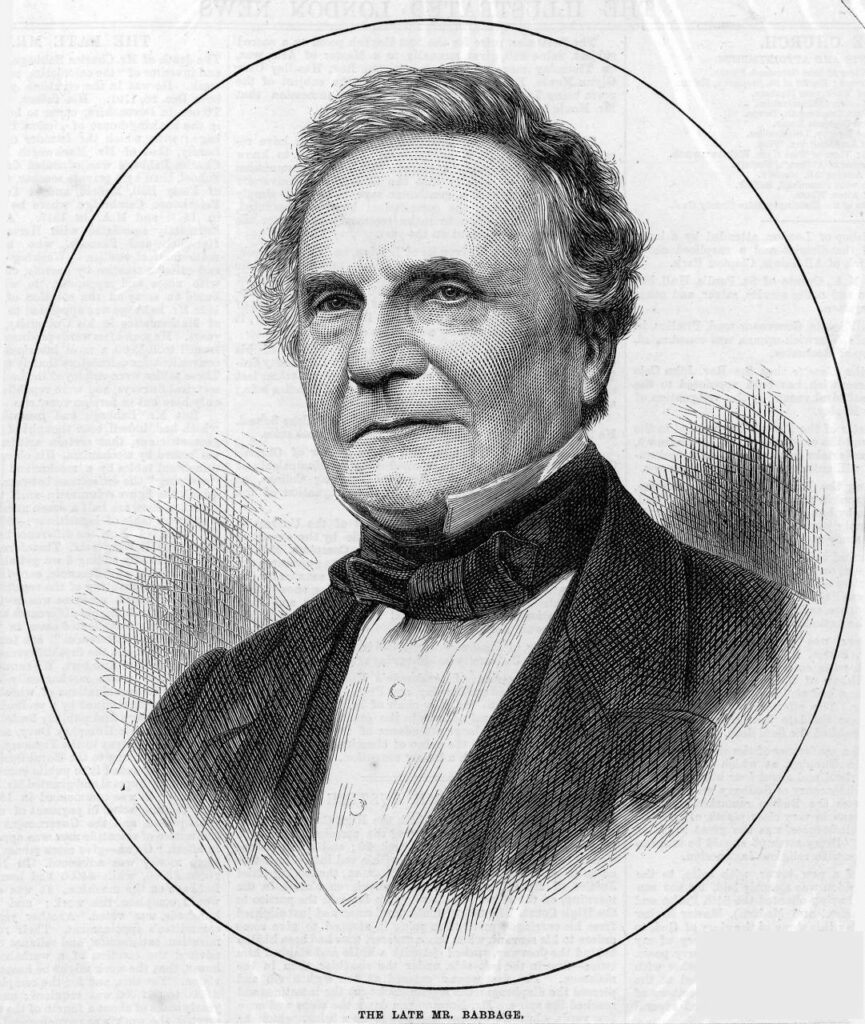
Charles Babbage
Charles Babbage (December 26, 1791 – October 18, 1871) was an English mathematician, philosopher, inventor, and mechanical engineer, known as one of the “fathers of the computer”. He devised the first programmable automatic calculating machines, anticipating the principles of modern digital computing. His visions, realized only in the 20th century, made him a pioneering figure in the history of computer science.
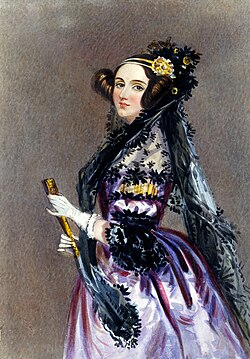
Ada Lovelace
Ada Lovelace (1815–1852) was a British mathematician and writer, known as the first computer programmer. Her annotations to the description of Charles Babbage’s “Analytical Engine” introduced the concept of the computer algorithm, anticipating the idea of a universal calculator by a century.
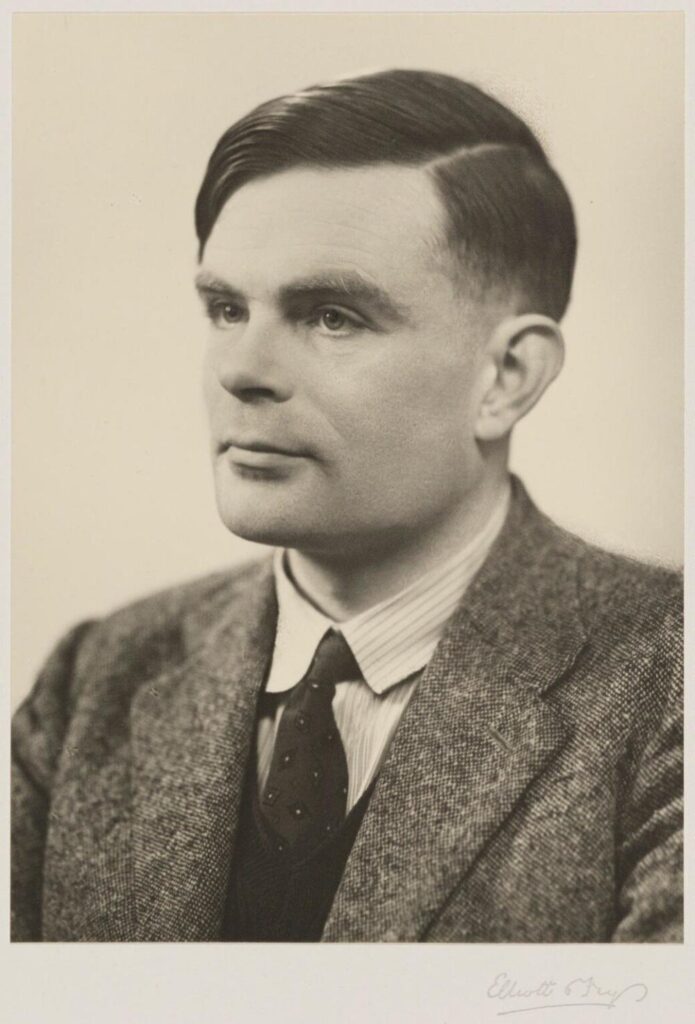
Alan Turing
Alan Mathison Turing (1912–1954) was a British mathematician, logician, and cryptographer, considered the father of modern computer science. During World War II, he helped decipher German codes, Enigma, and contributed enormously to the birth of computer science and artificial intelligence.
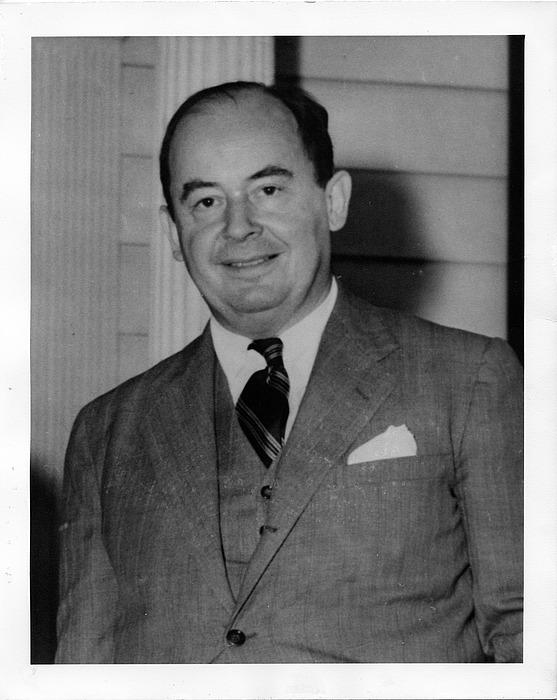
John von Neumann
John von Neumann (Budapest, December 28, 1903 – Washington, February 8, 1957) was a Hungarian-American mathematician and physicist, one of the principal founders of modern computer science. His logical model of computers, known as the von Neumann architecture, still forms the basis of most digital computing systems today. He proposed a system where data and programs are stored in the same memory.
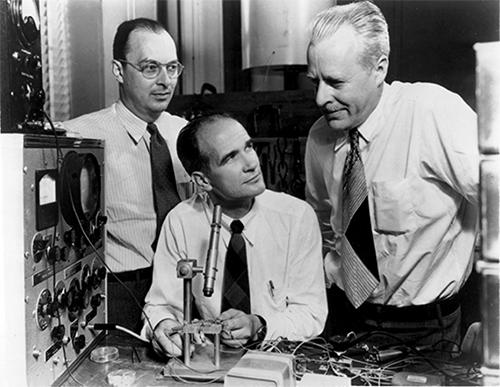
William Shockley, John Bardeen e Walter Brattain
William Bradford Shockley (1910–1989) was an American physicist and inventor, known as the co-inventor of the transistor and a central figure in the birth of modern electronics. His work opened the era of semiconductors and contributed decisively to the formation of the future Silicon Valley.
John Bardeen (1908–1991) was an American physicist and electrical engineer, unique in history for winning the Nobel Prize in Physics twice: in 1956 for the invention of the transistor and in 1972 for the theory of superconductivity. His discoveries transformed electronics and condensed matter physics.
Walter Houser Brattain (1902–1987) was an American physicist, co-inventor of the transistor alongside John Bardeen and William B. Shockley. His work on semiconductors at Bell Telephone Laboratories revolutionized electronics, ushering in the era of solid-state devices and modern computers.
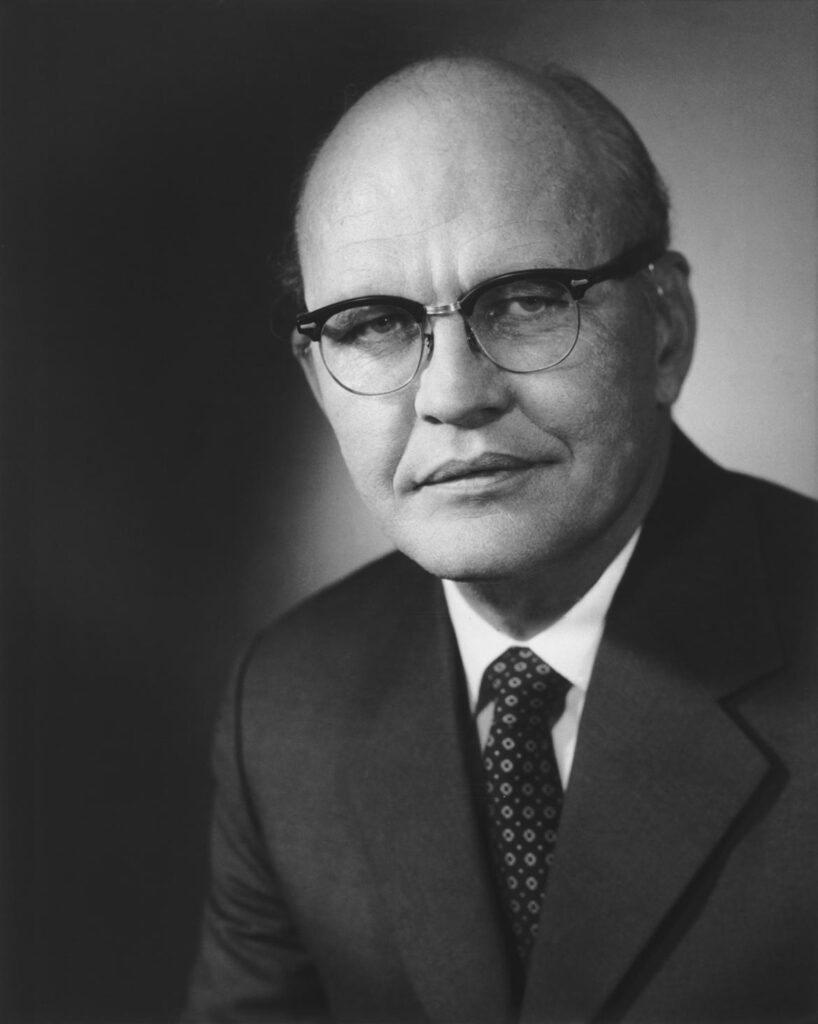
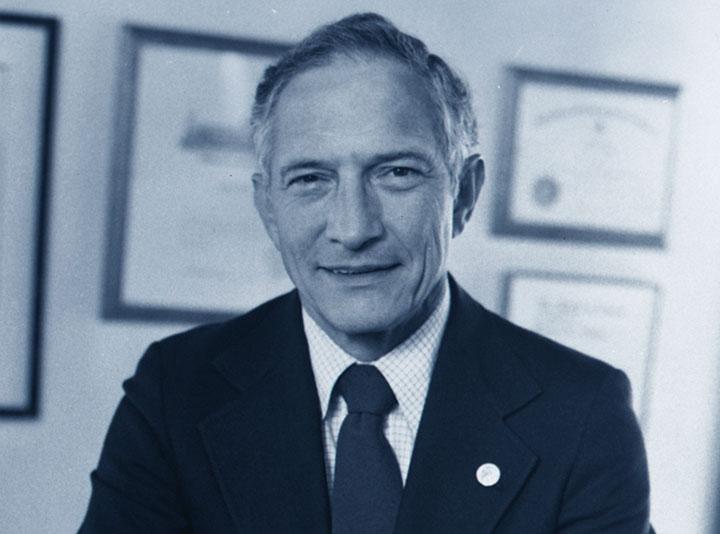
Jack Kilby e Robert Noyce
Jack St. Clair Kilby (1923–2005) was an American engineer and inventor, universally recognized as one of the fathers of the integrated circuit. His work at Texas Instruments made the birth of the microchip possible, the foundation of all modern electronics, and earned him the Nobel Prize in Physics in 2000.
Robert Noyce (1927–1990) was an American engineer and entrepreneur, co-inventor of the integrated circuit and co-founder of Fairchild Semiconductor and Intel. A key figure in the development of Silicon Valley, his work made possible the era of microprocessors and the personal computer revolution.
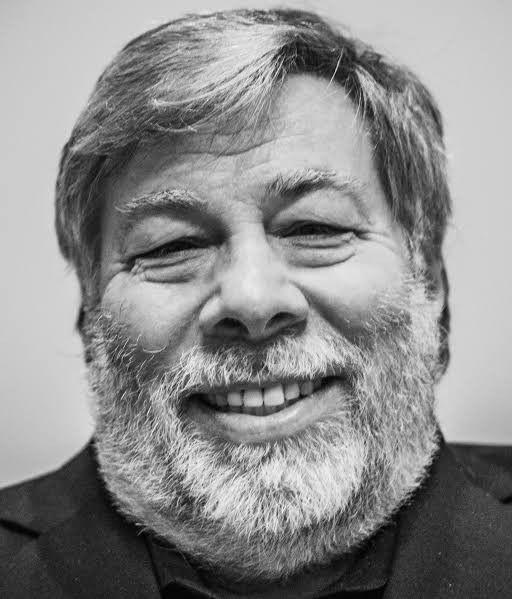
Steve Wozniak
Steve Wozniak (San José, August 11, 1950) is an American electronics engineer, computer scientist, and entrepreneur, co-founder of Apple Inc. alongside Steve Jobs and designer of the first Apple I and Apple II personal computers. He is considered a key figure in the computer revolution of the 70s and 80s.