
The Jacquard Loom
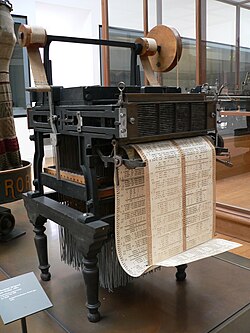
When talking about the Jacquard Loom, it is already known that we are referring to the punch cards created by Joseph-Marie Jacquard. In fact, the Jacquard Loom was the first to operate with binary code (only 1 or 0) in industry. The punch cards worked like this: when there was a hole, it was 1 = yes, and when there wasn’t, it was 0 = no. This was the first true ancestor of the computer.
Ada Lovelace
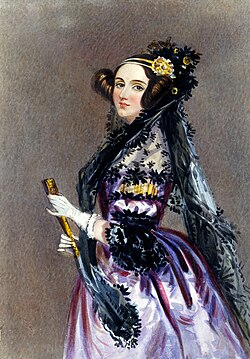
Ada Lovelace was the first programmer in history. She was the first to understand the revolutionary potential of the Analytical Engine created by the mathematician Charles Babbage. While translating an article about the project, she added personal notes containing an algorithm to calculate Bernoulli numbers, which is considered today the first computer program in history. But her true genius went further: unlike her contemporaries, Ada intuited that this machine was not just for numbers, but could process any type of information, such as symbols, words, and even music, laying the conceptual foundations of modern computers a century in advance.
Alan Turing and the Universal Machine
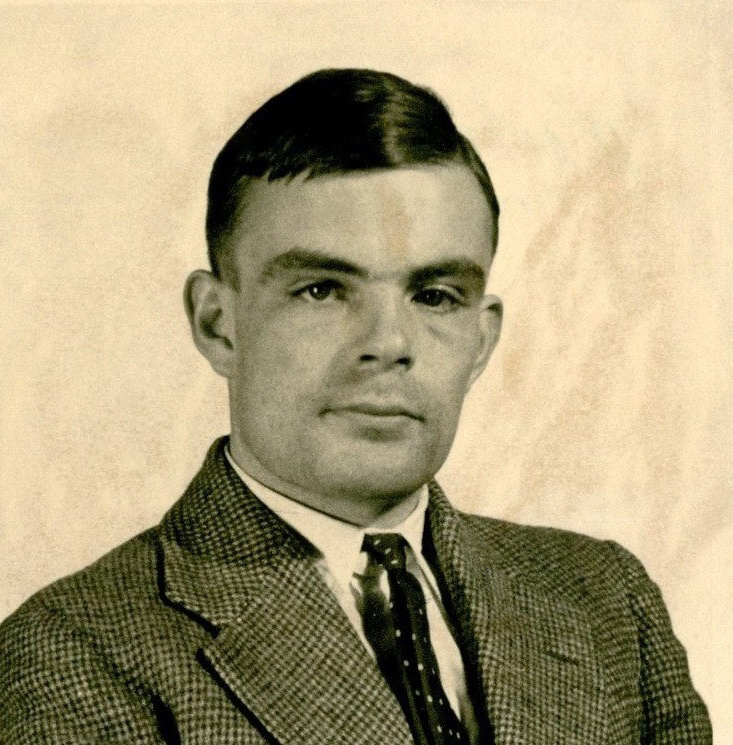
Alan Turing laid the foundations of modern computer science through the concept of his famous “Turing Machine”, presented in 1936. This device was not a physical object, but an ideal mathematical model to demonstrate that a machine guided by a set of logical instructions could perform any conceivable mathematical calculation. From this intuition came the term “universal machine”: the revolutionary idea of a single programmable computer capable of performing infinite tasks simply by changing the software, surpassing the old concept of machines built to do only one thing.
Birth of Modern Languages
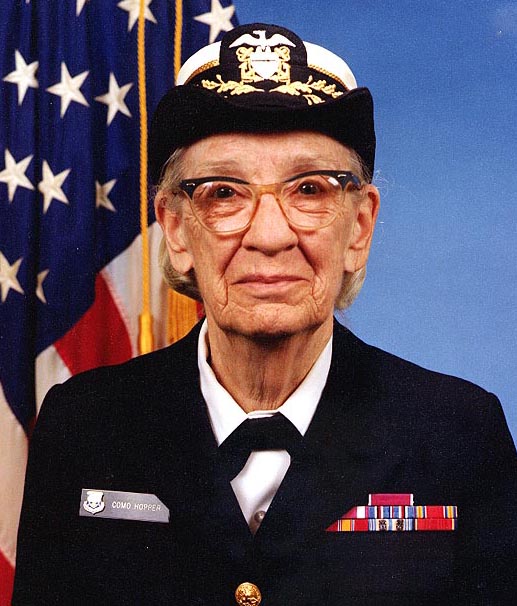
Grace Hopper was an absolute pioneer of computer science, famous for making programming accessible and intuitive. Before her, computers were programmed exclusively in a cumbersome machine language made of numbers. Hopper intuited that programs could be written using terms borrowed from the English language and, to prove it, she designed the first compiler (the A-0 system). This revolutionary software acted as a “translator”, converting text written by humans into binary code readable by the machine. Thanks to this innovation, in 1959 she made a fundamental contribution to the creation of COBOL (Common Business-Oriented Language), one of the first high-level programming languages to achieve global success, conceived to standardize business data management.
C
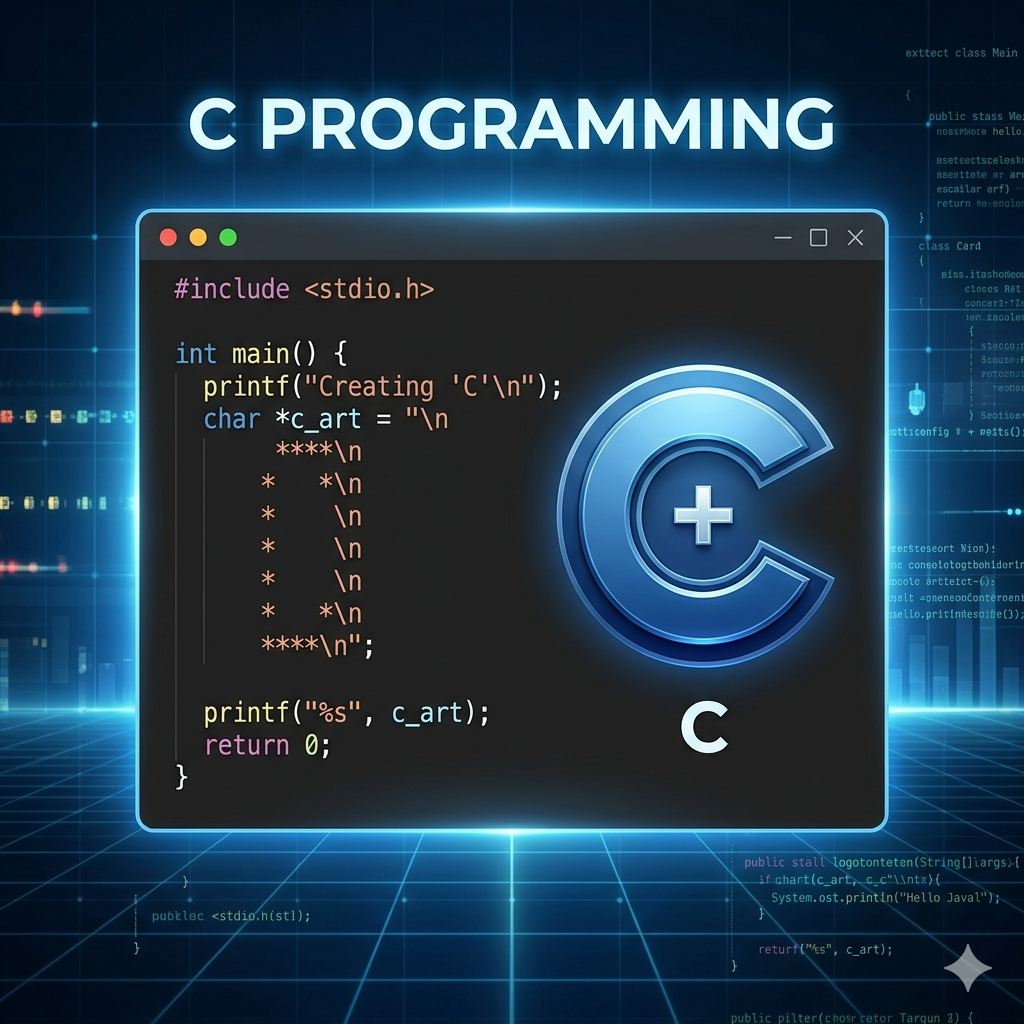
The C programming language, created by Dennis Ritchie between 1969 and 1973, was created for the Unix operating system. It then spread everywhere because it was fast, convenient, and also very close to the hardware (assembly). This programming language was later replaced by its “evolution”, namely C++.
First PC and First Machine Code
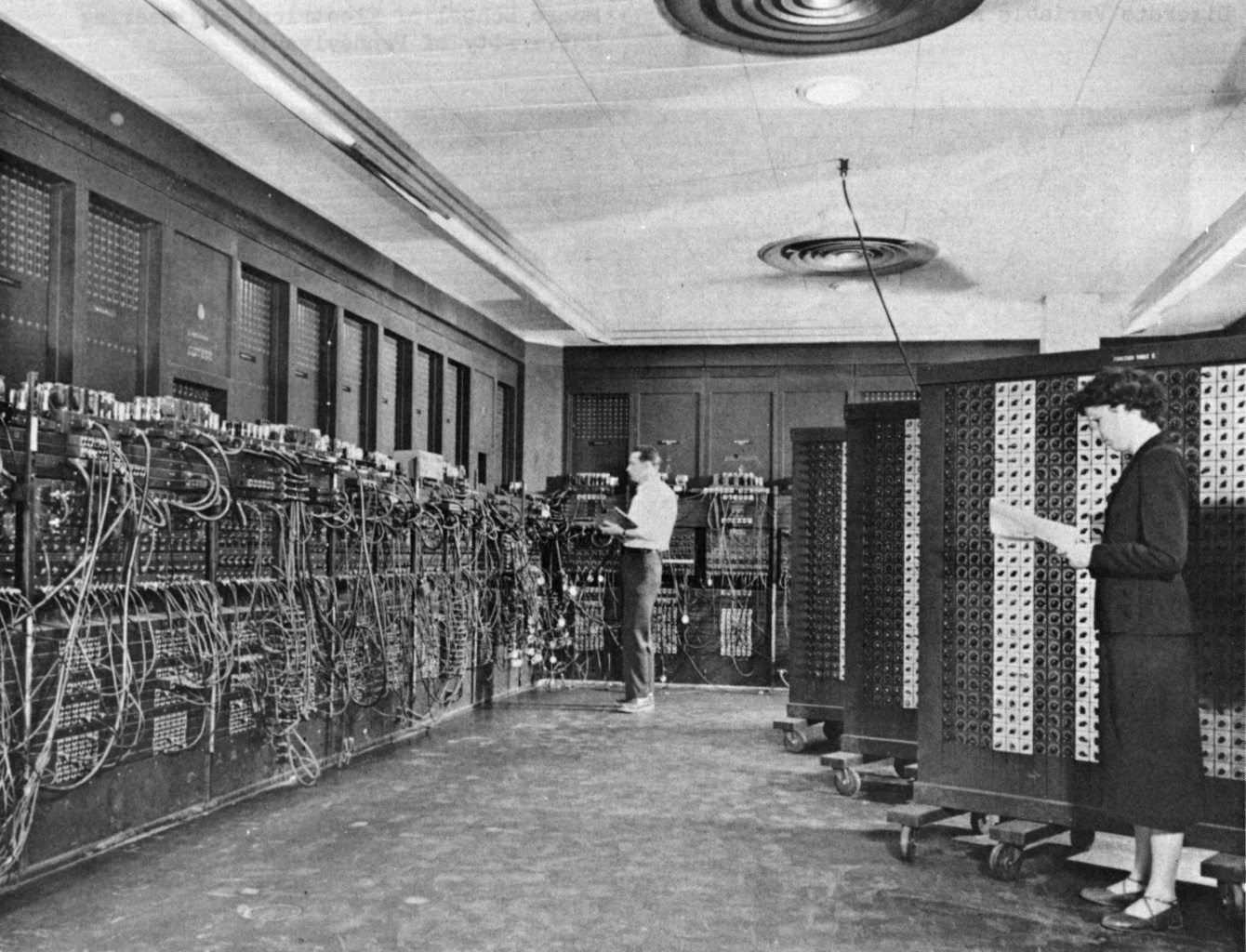
The first electronic PCs were the ENIAC. Building them was a nightmare; there were no screens or keyboards, just cables. The first machine code was entirely binary code (01011…), extremely difficult to understand, leading to countless errors.
C++
C++, created by Bjarne Stroustrup in 1983, is one of the most used languages today for AAA video games and also in some parts of operating systems. It is the evolution of the C language but with the introduction of OOP.
Perl
Created by Larry Wall in 1987 for data and text management scripting, today it is not completely dead but certainly not mainstream, as it has been surpassed by PHP, Python, and JavaScript. It is used by system administrators.
Python
Created by Guido van Rossum in 1991, released to be a program that is simple to read and simple to use. Nowadays, it is also used as a pillar for AI. Python focuses on speed and clean, simple code that is very familiar to English.
Java
Created with the philosophy “Write once, Run anywhere” by James Gosling / Sun Microsystems in 1995, becoming a standard for various enterprise applications.
Javascript
Created in just 10 days by Brendan Eich in 1995, programmed to animate web pages. Today it is essential for web pages as it is used both in development and on the client side.
PHP
Created by Rasmus Lerdorf in 1995, a program used to create dynamic web pages and has also redefined some applications like Facebook and WordPress, which were born thanks to PHP.
C#
Launched as a response to Java by Microsoft, now used in their ecosystem and also in video games launched on Unity, also incredible for website backends.
Go/Golang
Designed to manage scalability and Google’s enormous cloud infrastructures, focusing mainly on speed and simplified concurrency management.
Rust
Created by Graydon Hoare, a Mozilla employee, focused on memory safety and performance, quickly becoming the most loved language by programmers.
Swift
Created by Apple (Chris Lattner), replacing the old Objective-C, making app programming for macOS, tvOS, etc., much simpler, faster, safer, and more modern.