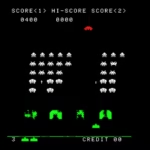
In the early years of video games, graphics were very rudimentary due to the technological limitations of the time. Games used simple white lines on a black background. With the arrival of the first 8-bit computers, so-called sprites appeared — small pixelated images representing characters and objects. This is where the pixel art style was born, still widely loved and used today.
The Leap into 3D
The 80s – 90s
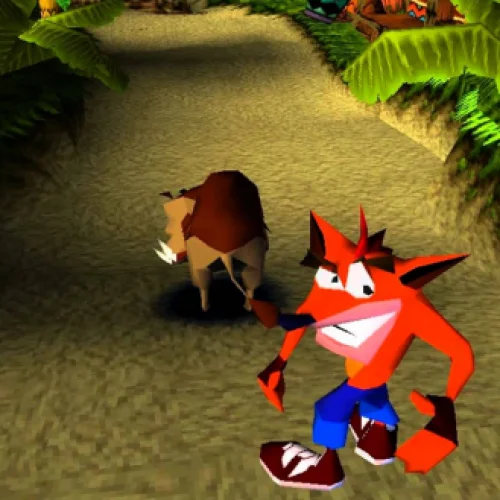
In the 1980s, thanks to more powerful computers, 2D games became much richer and more colourful. In the mid-1990s the real revolution arrived: the shift to 3D. For the first time, games displayed environments with depth, even if characters were still quite blocky and lacking in detail. Towards the end of the decade, the first dedicated graphics cards made surfaces smoother and character movements far more natural
The Leap into 3D
The 80s – 90s
In the 1980s, thanks to more powerful computers, 2D games became much richer and more colourful. In the mid-1990s the real revolution arrived: the shift to 3D. For the first time, games displayed environments with depth, even if characters were still quite blocky and lacking in detail. Towards the end of the decade, the first dedicated graphics cards made surfaces smoother and character movements far more natural
The Evolution of Graphics
2000 – 2018
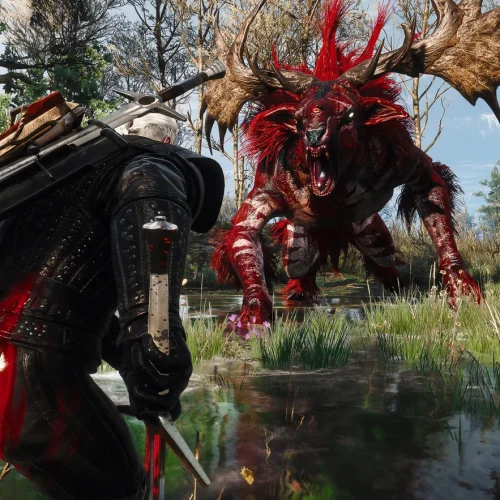
With PlayStation 2 and Xbox, developers stopped focusing solely on the quantity of detail and began paying greater attention to visual quality. Lighting and shadows became more realistic and environments more alive. With PlayStation 4 and Xbox One, games reached Full HD resolution. Techniques such as photogrammetry — which involves deriving digital models from real photographs — made landscapes incredibly realistic. Character animations also improved enormously thanks to motion capture, meaning the recording of the movements of real actors.
The Future of Gaming
2019 – present
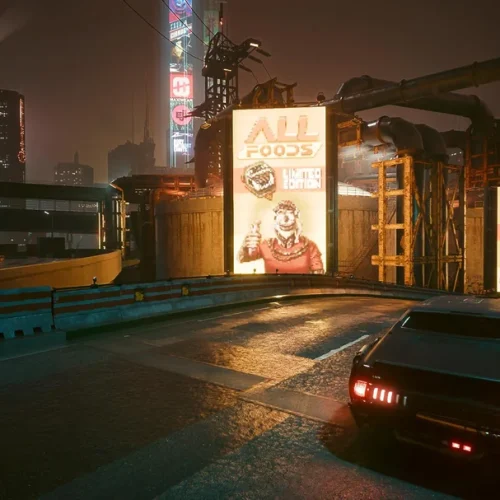
In recent years graphics have taken a further leap in quality. Ray tracing reproduces the real behaviour of light, making reflections and shadows far more convincing. DLSS is an AI-based technology that improves image quality without burdening the system. Finally, thanks to SSDs, loading times between screens have practically disappeared.
The Future of Gaming
2019 – present
In recent years graphics have taken a further leap in quality. Ray tracing reproduces the real behaviour of light, making reflections and shadows far more convincing. DLSS is an AI-based technology that improves image quality without burdening the system. Finally, thanks to SSDs, loading times between screens have practically disappeared.
🎨 Graphic Design Quiz
1. Which color model is used for printing?
2. What does the acronym RGB stand for?
3. Which software is commonly used for professional photo editing?
4. In typography, the term "font" indicates:
5. The recommended resolution for high-quality printing is: