hardware
Hardware represents the physical body of the computer — everything we can touch, from circuits to fans. This subject is not taught in all high schools; it remains the preserve of vocational schools and technical IT institutes. In these environments students learn to open a PC and assemble its components.
hardware
Hardware represents the physical body of the computer — everything we can touch, from circuits to fans. This subject is not taught in all high schools; it remains the preserve of vocational schools and technical IT institutes. In these environments students learn to open a PC and assemble its components.
PC Components
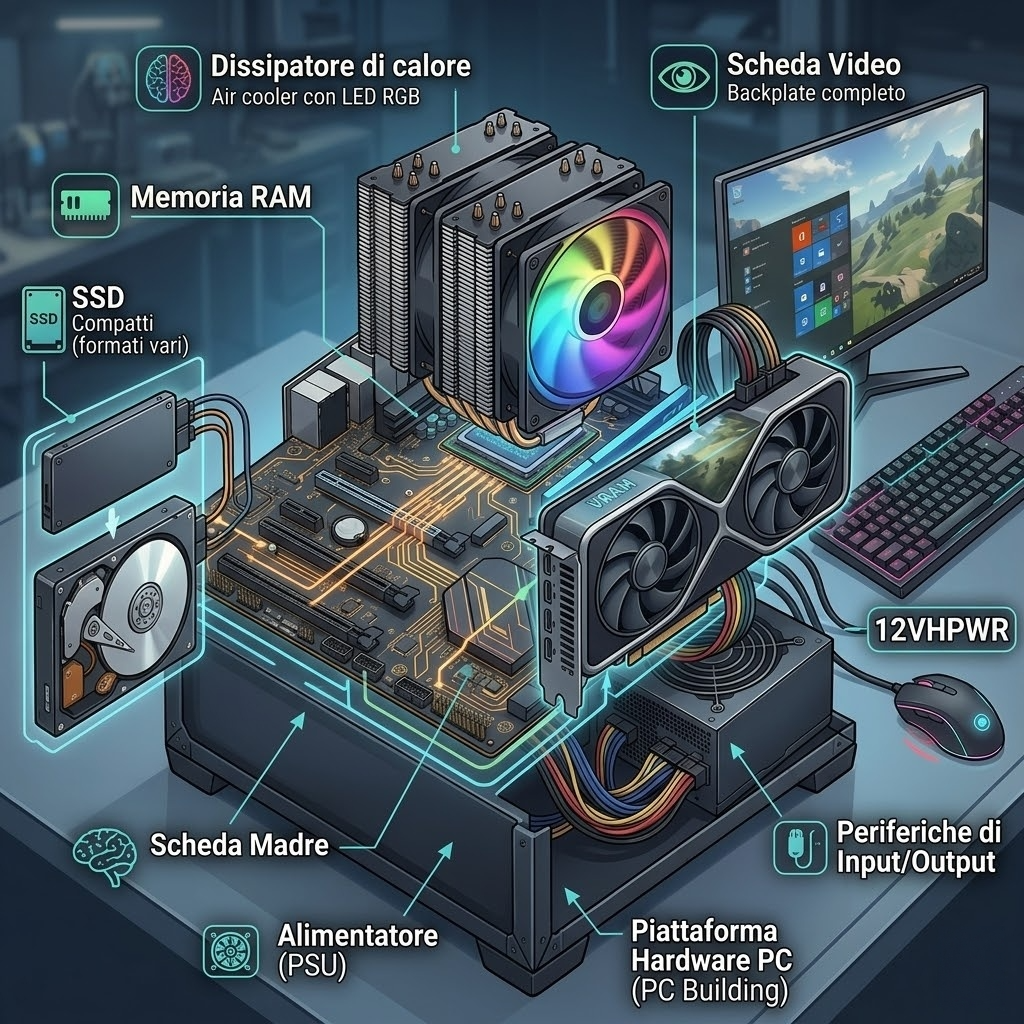
The heart of the PC is the Motherboard, which connects every component via the system buses. The Processor (CPU) coordinates activities and physics calculations, while RAM handles fast multitasking. The Graphics Card (GPU) and its VRAM are the essential graphic engines for gaming. For storage, SSDs guarantee speeds superior to older HDDs, while the Power Supply Unit (PSU) provides stable energy. The system is protected by the Heat Sink, which prevents overheating, and is completed by low-latency I/O Peripherals for an immediate response to commands.
The Link between Hardware and Gaming
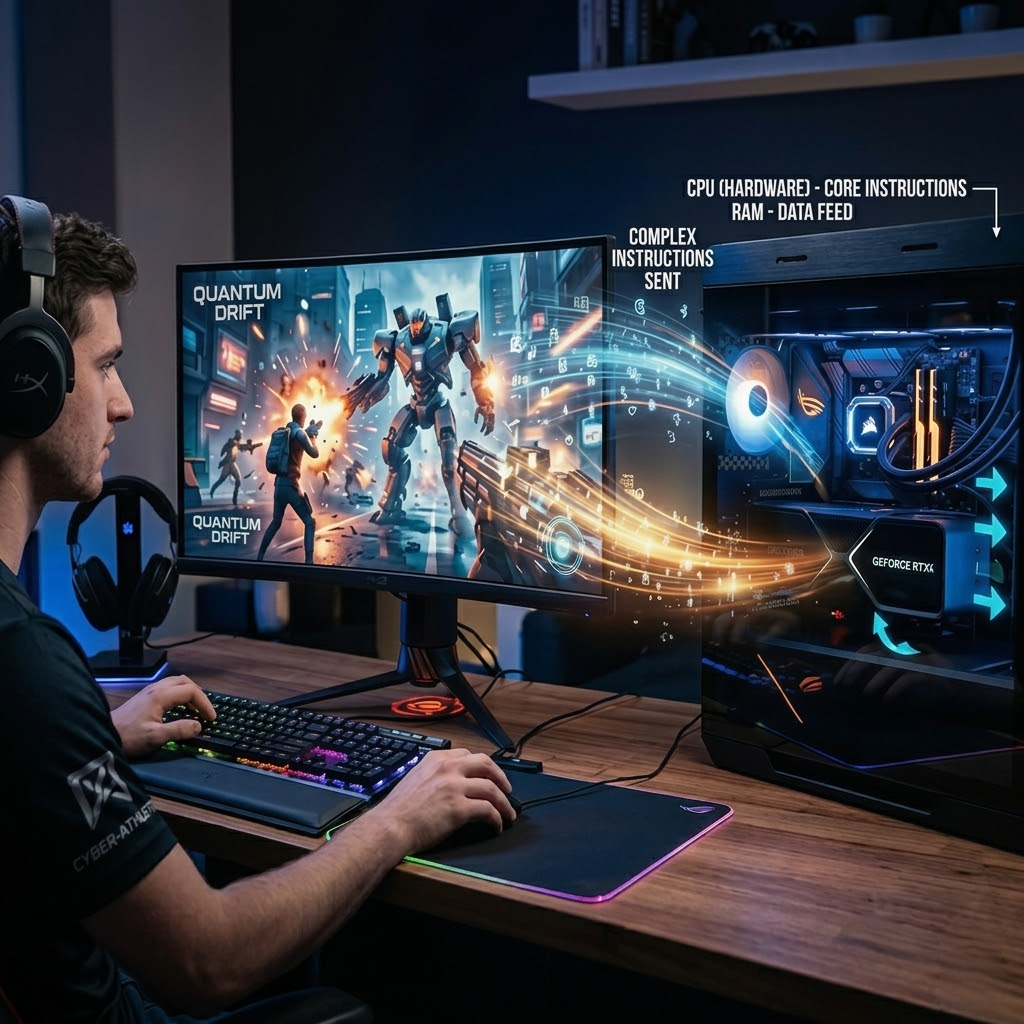
The link between hardware and gaming is a vital symbiosis where every visible frame is the result of instantaneous collaboration between components. If the game is the mind that designs the world, hardware is the body that materialises it, transforming mathematical calculations into fluid images and immediate interactions. This dependency constantly drives technological innovation, as the need to manage ever more complex environments requires processors and graphics cards capable of surpassing their own power limits each time.
Office PC vs Gaming PC
Difference between an office PC and a gaming PC
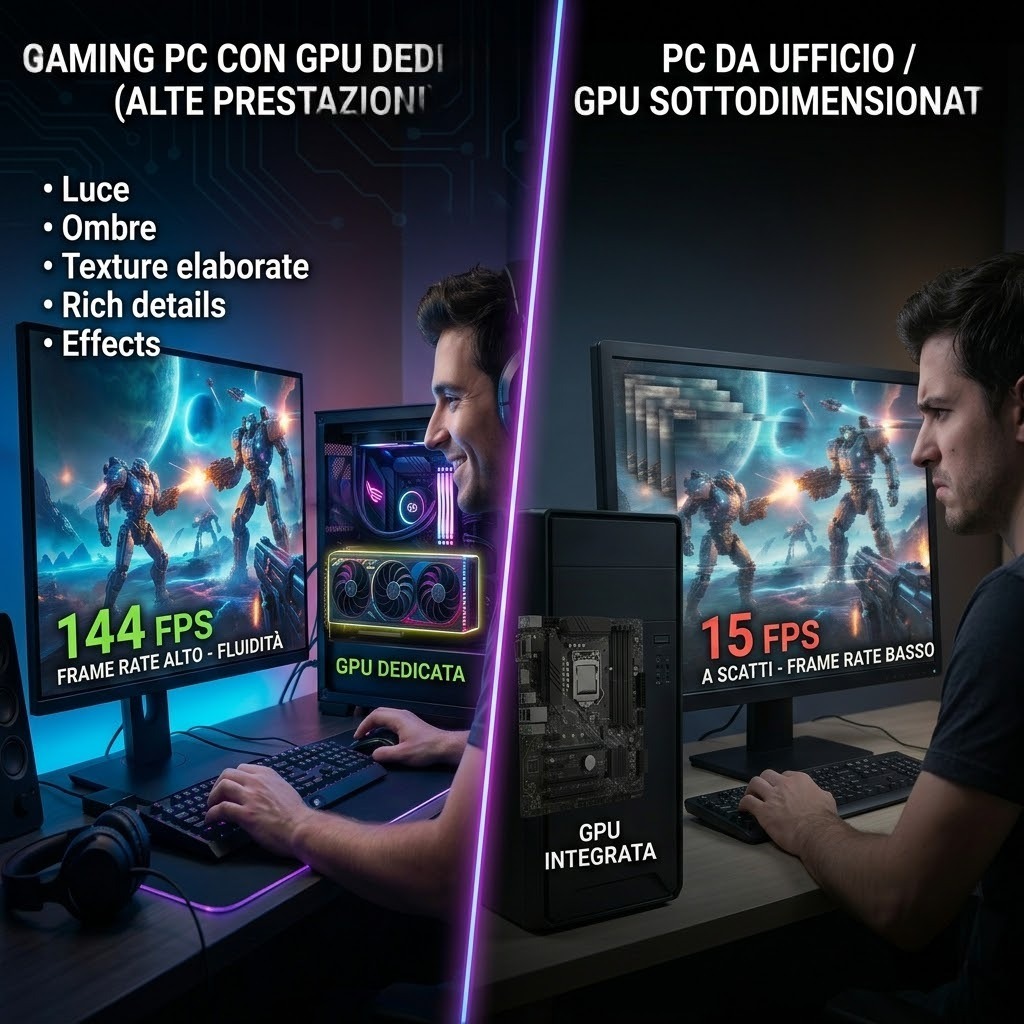
While an office computer focuses on energy saving and handling static tasks via integrated graphics, a gaming PC is a specialised machine where the dedicated GPU is the absolute star. This component does not simply display images; it reconstructs shadows and reflections thousands of times per second to guarantee smoothness. Without this specific power and an adequate cooling system to manage the workload, the system slows down dramatically, making the interactive experience that defines modern gaming impossible.