
Talk like a Gamer: the English of video games
Video games are today one of the most powerful forces in English language learning among young people. From the interfaces of major titles to multiplayer chats, English is the dominant language of global gaming culture, and its vocabulary is increasingly entering everyday speech.
Talk like a Gamer: the English of video games
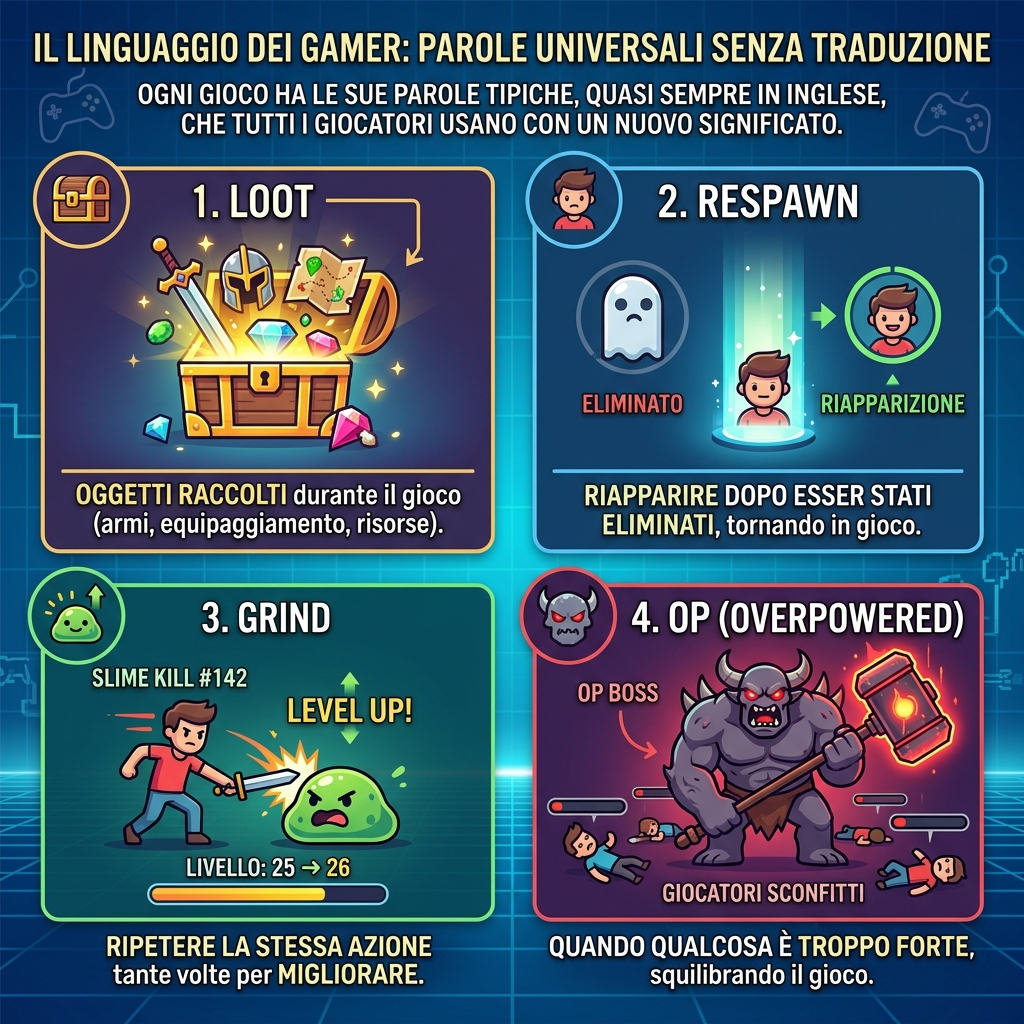
Every video game has its own typical words, almost always in English, that all players use without translating them. For example: loot refers to the items you collect during the game, respawn means reappearing after being eliminated, grind means repeating the same action many times in order to improve, and OP (overpowered) is used when something is too powerful. These are normal English words to which gamers have given completely new meanings.
Chat Slang
Playing online has created countless abbreviations and expressions born from the need to communicate quickly during matches. The most famous are: GG (Good Game, said at the end of a match to be a good sport), AFK (Away From Keyboard, when someone stops responding), noob (someone who is just starting out), and ragequit (when you leave the game in anger because you are losing). These expressions are now heard outside gaming too, on social media and in everyday conversation.
Why do we use them in Italian too?
Saying “that character is too OP” or “I did a massive grind” is completely normal for an Italian teenager today. We do it because there is often no equally effective Italian translation, because the words are shorter and faster, and because using them makes us feel part of a global community. After all, it is nothing new: film, selfie and spam also come from English and we use them every day without even thinking about it.